Missouri, 349 measured miles
349.0 measured miles, and you reserve a 3 night St Louis trip from Cincinnati
The road runs west to the Mississippi and takes 6.54 hours. Split across three booked nights, every night carries 2.18 hours of driving, which is step three of the four the office uses.
Nothing is held here until the office has written back and you have said yes to what it wrote. No part of a stay is ever paid for through these pages.
- Road from Fountain Square
- 349.0 miles
- Hours at the wheel
- 6.54
- Nights the office books
- 3
- Hours of road per night
- 2.18
- From
- $705 per person
Hours and miles are measured along the road from Fountain Square, not drawn straight on a map, and they assume clear traffic. Your own run will differ with weather, roadworks and the hour you leave.
What 2.18 hours a night buys
Reserve a 3 night St Louis trip from Cincinnati and the road is the first thing bought. The office puts the distance at 349 measured miles from Fountain Square, and the drive takes 6.54 hours. Divided by the three nights held at the other end, that is 2.18 hours behind the wheel for every night in the room. On the four step scale the office uses, this entry sits at the third: the road is most of a day.
Most of a day is the honest description, and it is printed here rather than discovered on I-70. A car leaving Cincinnati in the morning gives up the afternoon to the windshield. The Mississippi shows up late. The first evening in St Louis is a short one, and a stay planned as though it were a full one turns three nights into two.
The quotient is also the whole order of the list. A short road spread over many nights produces a small number and stands near the top. A long road over two nights produces a large one and stands near the bottom. Nothing else sorts the entries: not the size of the city, not the season, not the price.
What St Louis actually holds
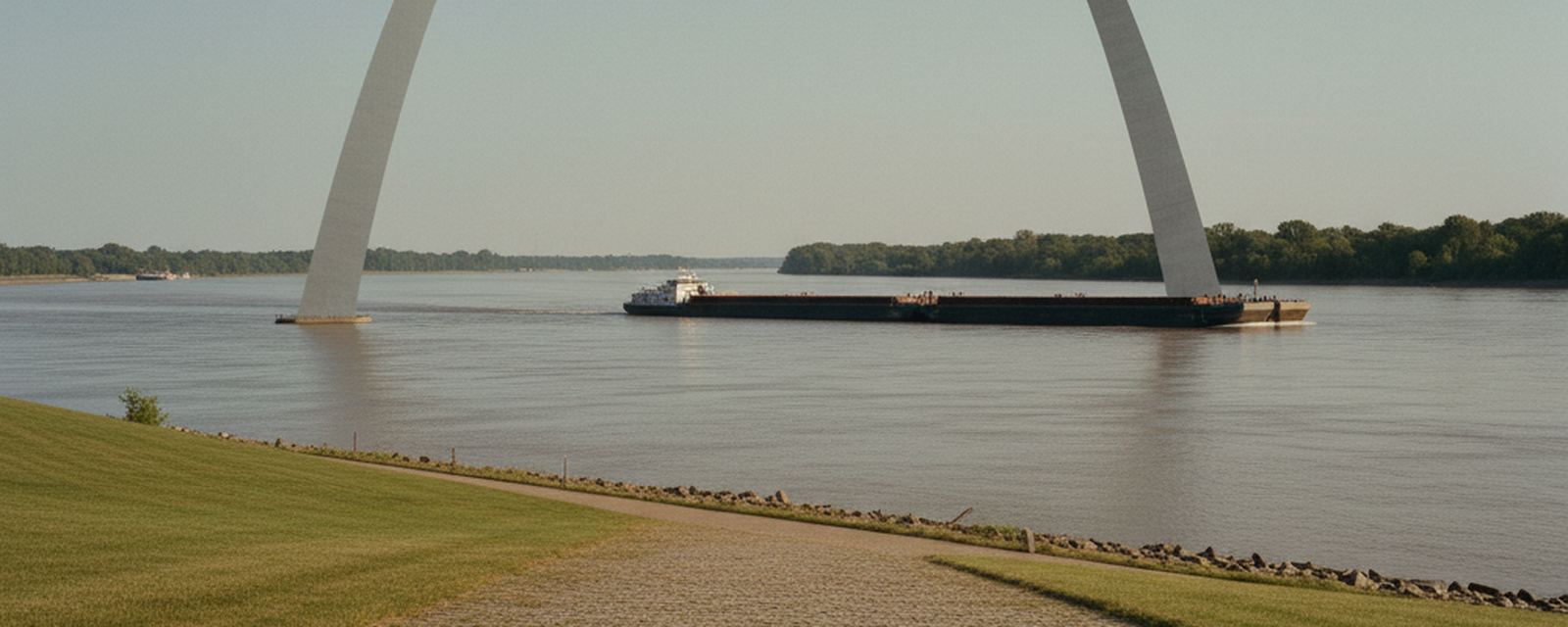
The city sits on a bluff over the Mississippi, and the riverfront is where most arrivals start. The Gateway Arch stands off the levee with parkland underneath it and a museum sunk into the ground below the legs. The old courthouse faces it across the street. North of that the cobblestones run down to the water, barges work the channel all day, and the bridges upstream are worth a slow look.
West of downtown the city opens into a large public park laid out for a world exposition. An art museum stands on its hill, a history museum sits at one corner, and a science building and a zoo share the same green. Admission rules differ from one to the next, and the office prints what applies on the booked dates rather than guessing at them.
Away from those two anchors the city is made of neighborhoods rather than sights. One is Italian and built around bakeries, groceries and a few streets of brick houses. Another keeps a produce market under an old hall with rowhouses around it. A third runs a long street of secondhand shops and Mexican kitchens. Each takes an afternoon, and each is made for walking rather than driving.
Three nights, and how they usually fall
The first night is short by arithmetic. After 6.54 hours the useful part of it is dinner and a walk, and the riverfront takes a walk well: the ground under the arch is lit and the levee is level.
The two middle days carry the stay. One of them goes to the park on the west side, where the institutions sit close enough together to move between on foot. The other belongs to the river: the museum under the arch, the courthouse, the cobblestone landing, then over the bridge into Illinois, where a large group of prehistoric earthen mounds stands on the floodplain within an afternoon of downtown.
The third evening is the one travelers waste. Morning belongs to the road home, so the last night is worth spending properly: a long table, frozen custard after it, and the car loaded before bed. Toasted ravioli and a thin square cut pizza are local, and nobody has to be talked into either.
The drive west, and what passes the window
The route leaves Cincinnati on I-74 and runs west through southeastern Indiana: grain bins, county seats set back from the road, and long level stretches with nothing to decide. Indianapolis arrives early enough to make a sensible first stop.
From there the road becomes I-70 and stays I-70 to the Mississippi. Illinois is long and flat, the towns come at intervals, and the interstate barely bends. The last stretch drops off the prairie onto the floodplain, and the river crossing puts the skyline in the windshield all at once.
One thing is worth writing down before departure. Cincinnati keeps Eastern time and St Louis keeps Central, so an hour comes back on the way out and is paid again on the way home. The office states it in the itinerary, because 6.54 hours with an hour returned lands earlier than people expect, and the same road eastbound lands later.
The office books beds and measures roads
Go Air Travels is a reservations office at 35 East Seventh Street, Cincinnati. Its part in this entry is narrow and it says so: measure the road from Fountain Square, hold three nights in St Louis in the name of the traveler, and put both in writing. Three nights on this entry start from $705 per person, with the final figure confirmed when the rooms are held.
No transport of any kind is arranged here. Nothing on rails, nothing on water, no coach, no transfer at either end. The car belongs to the traveler, the keys stay with the traveler, and all 349 measured miles are driven by the traveler.
Insurance sits outside what this office does. It does not sell insurance, does not arrange it and gives no advice on it, and the same goes for documents of any kind. A reservations office that pretends otherwise is doing something else.
What the figure holds
- Three nights of lodging in St Louis, held in the name of the traveler and confirmed in writing.
- A written route sheet with the 349 measured miles broken into legs and the rest stops marked.
- The 6.54 hour road time and the 2.18 hours a night stated on the same sheet.
- One named person at the office, from the first question to the last night.
- A note on the time zone line and what it does to the clock on arrival day.
- Room taxes and city lodging charges, itemized in the quote.
What it leaves to you
- Fuel, tolls and anything else the car needs over the 349 measured miles.
- Parking, at the lodging and in the city.
- Meals, admissions and anything paid at the door.
- Insurance of every kind, which this office neither sells nor arranges.
- Transport of every kind. The drive is the traveler's own.
The office adds no booking fee of its own. What you pay is what each supplier charges, and the written offer shows each line separately.
When this one is worth the road
Late spring and the first half of fall are when the road is worth its 6.54 hours. The park and the riverfront are outdoor places, and a St Louis summer carries heat and humidity that make a long walk unpleasant by midday. Winter puts ice on the Illinois stretch of I-70 and shortens an arrival evening that is already short. April into early June, and the middle of September into late October, give three nights that can be spent outdoors and a drive that does not have to be timed around weather.
Why does the page print 2.18?
Because that number decides where this entry sits. The office divides the measured driving hours by the nights it books, and 6.54 over three nights gives 2.18. A short road over many nights makes a small number and sits high in the list; a long road over two nights makes a large one and sits low.
Does the office arrange the drive?
No. The traveler drives a personal car, buys its fuel, pays its tolls and keeps the keys. What the office contributes is the measurement, a written route with the legs marked, and three nights held in St Louis.
Can the stay run longer or shorter than three nights?
Ask, and the office will measure the entry again before quoting. The road stays 349 measured miles either way, so fewer nights make each night carry more of it and more nights make each night carry less. The office restates the number in writing rather than leaving it to be worked out.
Nothing in this list moves you. Getting from one place to the next is outside what this office reserves and it signs nothing with any carrier; you take your own car, and the office books what waits at the far end.
Start with the number of nights
Tell the office how many nights you have. Everything else follows from that number, including whether the drive is worth making at all.