Stage three of four
6 nights against 9.40 hours: reserve a 6 night Shenandoah trip from Cincinnati, 477.7 miles east
The road is most of a day. At 9.4 hours out and six nights held, each night carries 1.57 hours of driving, and that figure is printed before the booking rather than after it.
Nothing is held here until the office has written back and you have said yes to what it wrote. No part of a stay is ever paid for through these pages.
- Road from Fountain Square
- 477.7 miles
- Hours at the wheel
- 9.40
- Nights the office books
- 6
- Hours of road per night
- 1.57
- From
- $1,350 per person
Hours and miles are measured along the road from Fountain Square, not drawn straight on a map, and they assume clear traffic. Your own run will differ with weather, roadworks and the hour you leave.
Six nights against 9.4 hours
The arithmetic comes before the description on this page. Reserve a 6 night Shenandoah trip from Cincinnati and the road behind it measures 477.7 miles and 9.4 hours at the wheel, one way. Divided across the six nights the office holds, that works out at 1.57 hours of driving for every night of the stay. On the scale this office sorts by, the entry sits at stage three of four: the road is most of a day.
Stage three is stated here rather than discovered later. A driver leaving Fountain Square in the morning reaches the valley in the evening, and the return day looks the same. Six nights is what keeps the ratio where it is. Take nights away and the hours per night climb, because the drive does not get shorter when the stay does.
The office books the nights and measures the road. It moves nobody. The car belongs to the traveler, the driving belongs to the traveler, and every figure on this page was measured along the road that is actually driven rather than drawn straight across a map.
What stands along the ridge
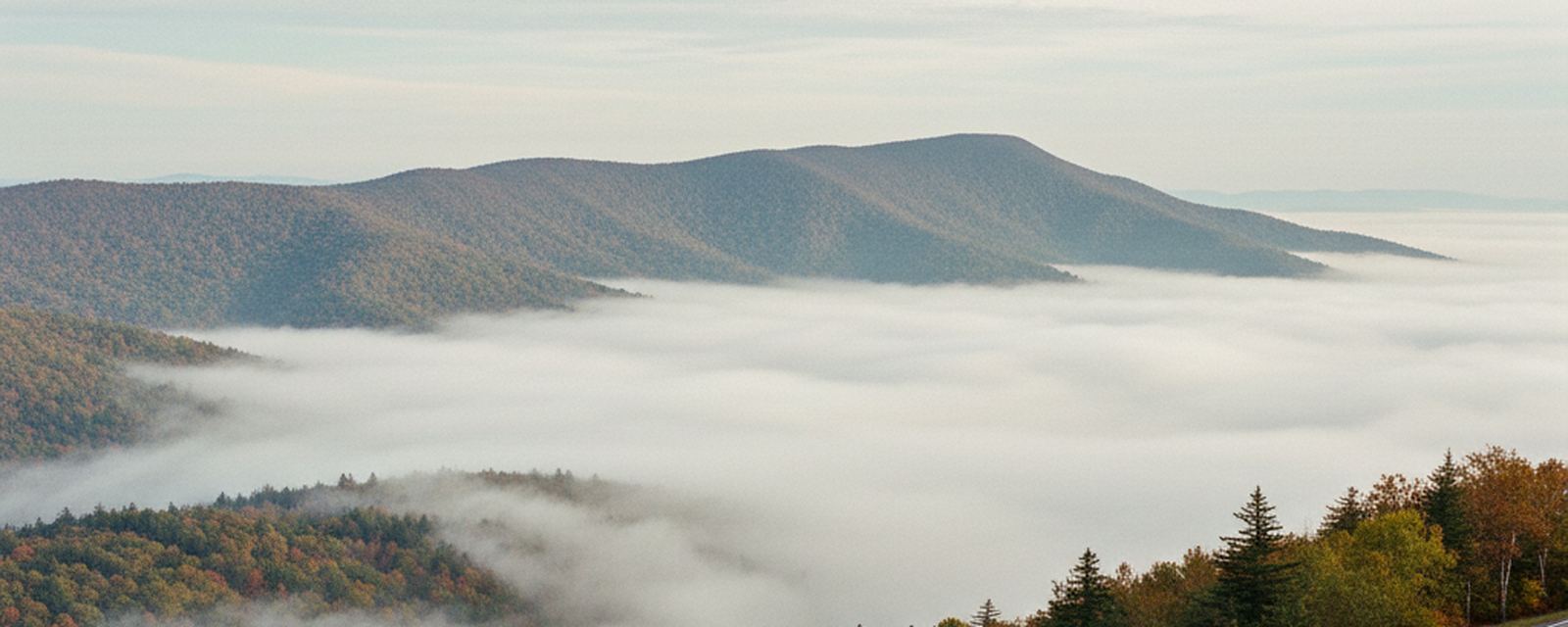
Shenandoah is a long thin park laid over the crest of the Blue Ridge, with one road running its length and overlooks cut into both sides of it. West of the crest the ground drops into the Shenandoah Valley, the river winding along the floor and Massanutten Mountain standing down the middle of it like a wall. East, the land falls away in ridges toward the Piedmont. The same road serves both views, and a traveler crosses from one to the other in a few turns.
The walking here mostly goes downhill first. Whiteoak Canyon, Dark Hollow, Rose River, Doyles River and Jones Run all start near the crest and drop to water, which means the climb waits at the end. Hawksbill is the high point of the park and one of the short walks. Old Rag is the hard one, an open rock scramble on the east side that needs planning weeks ahead in the busy months.
Big Meadows sits near the middle of the ridge, an open field surrounded by forest, and it is where sitting still comes naturally. Deer graze it in the evening without much concern for anyone watching. Black bears live in the park in real numbers and are seen from the road more often than people expect. Barred owls call after dark, and on a clear night the sky over the meadow is dark enough to be worth staying up for.
Six days that do not repeat
Six nights is enough to take the ridge in sections instead of one long push. The north end near Front Royal, the middle around Big Meadows and the south end toward Rockfish Gap each hold a day on their own. The speed limit on the ridge road is set low, and trying to cover all three sections between breakfast and dinner mostly produces a day of driving.
The valley floor takes the other days. Luray, Sperryville, Stanardsville and the small river towns sit close together, the limestone under the valley has caves open to visitors, and the South Fork of the Shenandoah runs slow enough to paddle without experience. Orchards and farm stands line the valley roads through late summer and fall.
One of the six days is usually left empty on purpose. A stay reached by a full day of driving tends to work out when at least one morning has nothing written against it.
The road east out of Cincinnati
The drive leaves over the river and runs east through Kentucky with the Ohio on the left for a long stretch, then crosses into West Virginia at Huntington. Charleston is the last large city on the way out. After it the road begins to climb, and the rest of West Virginia is long grades, rock cuts and ridges arriving one after another.
The state line sits high in the Alleghenies. Virginia opens downhill from there, and the last part of the drive runs on two lane valley roads with the Blue Ridge standing on the left the whole way. That last stretch is why 9.4 hours does not divide neatly into 477.7 miles. The time was measured at the speeds these roads allow, not taken from an average of open four lane driving.
It is a day. The office writes it as a day, suggests a stop rather than a straight run, and sends the return route separately, because crossing the mountains westbound in the late afternoon is a different drive from the one made going out in the morning.
How this one is held
The price is from $1350 per person for the six nights. What that covers and what it leaves out is set down below in plain terms, and the final figure is confirmed in writing when the dates are held, not before.
Requests come in through the form on this site, in writing, at whatever hour suits. A written reply follows within one business day, naming the nights actually open for the dates asked about and repeating the measured road numbers in full. No payment is taken on this site.
Go Air Travels is narrow on purpose. It books stays that a driver reaches from Cincinnati under their own power, and it measures that road before it offers the nights. Nothing else is sold from this page.
What the figure holds
- Six nights of lodging in the Shenandoah Valley, held in writing before anyone sets out.
- A written plan for the six days, split between the ridge road and the valley floor.
- Written directions from Fountain Square, with the 477.7 miles and the 9.4 hours stated on the page rather than buried in it.
- A separate return route, since the way back is not always the way out.
- One rewrite of the plan after the traveler has read it.
What it leaves to you
- The driving itself. The car, the fuel and the tolls stay with the traveler.
- The vehicle pass sold at the park entrance station.
- Meals, unless the written confirmation for a given night says otherwise.
- Admission to anything in the valley.
- Anything added to the stay after arrival.
The office adds no booking fee of its own. What you pay is what each supplier charges, and the written offer shows each line separately.
When this one is worth the road
Late April into May is when water runs hard in the canyons and the leaves are still climbing the mountain, so the ridge can be seen through and the walking stays cool. The second half of October is the other answer and it is the crowded one: color moves down the ridge over a few weeks and the ridge road crawls on weekends. Summer is green, hazy, and cooler on the crest than on the valley floor. Winter is the honest warning. Ice and snow shut sections of the ridge road, sometimes for days at a time, and a six night stay in January can pass without the crest opening at all. The valley stays reachable in that window, the ridge does not, and the office says so before any night is held.
Does the $1350 cover getting to Virginia?
No. It covers the six booked nights and the written plan built around them. The drive stays with the traveler: their own car, their own fuel, 477.7 miles and 9.4 hours each way, printed here before the booking rather than mentioned once the money is spent.
Why is 477.7 miles given as 9.4 hours?
Because the time was measured along the road that is actually driven. Most of it is four lane, but the last part runs on valley roads with towns on them, and the ridge road at the end is slow by design. The office prints the measured time instead of a quicker one.
Can the stay be shorter than six nights?
It can be asked for, and the answer comes back as arithmetic. Six nights against 9.4 hours is 1.57 hours of road per night. Remove nights and that figure rises, because the drive stays the same length. This entry is listed at six nights for that reason, and a shorter version is quoted with its own figure printed next to it.
Nothing in this list moves you. Getting from one place to the next is outside what this office reserves and it signs nothing with any carrier; you take your own car, and the office books what waits at the far end.
Start with the number of nights
Tell the office how many nights you have. Everything else follows from that number, including whether the drive is worth making at all.