1.63 hours a night
385.0 measured miles, and you reserve a 5 night Dolly Sods trip from Cincinnati, 385 measured miles out
Five nights on the high ground of eastern West Virginia, set against 385 measured miles and 8.17 hours at the wheel. That works out at 1.63 hours of driving for every night slept, the third step of four.
Nothing is held here until the office has written back and you have said yes to what it wrote. No part of a stay is ever paid for through these pages.
- Road from Fountain Square
- 385.0 miles
- Hours at the wheel
- 8.17
- Nights the office books
- 5
- Hours of road per night
- 1.63
- From
- $925 per person
Hours and miles are measured along the road from Fountain Square, not drawn straight on a map, and they assume clear traffic. Your own run will differ with weather, roadworks and the hour you leave.
Eight hours out, five nights to carry them
To reserve a 5 night Dolly Sods trip from Cincinnati is to take on 385 measured miles and 8.17 hours at the wheel to reach the plateau. Five booked nights carry that drive, so each night answers for 1.63 hours of it. That quotient, and nothing else, decides where this entry sits in the list.
The third step of four says the road is most of a day. A party that pulls out of Fountain Square in the morning will still be moving in the afternoon, and the slowest stretch waits at the end rather than the start. The same road comes back at the close of the week.
Five nights is the shortest stay the office puts against this road. Fewer nights would leave the drive carrying more than it can, and the figure would say so on this page before anyone booked.
Heath, bog and wind bent spruce
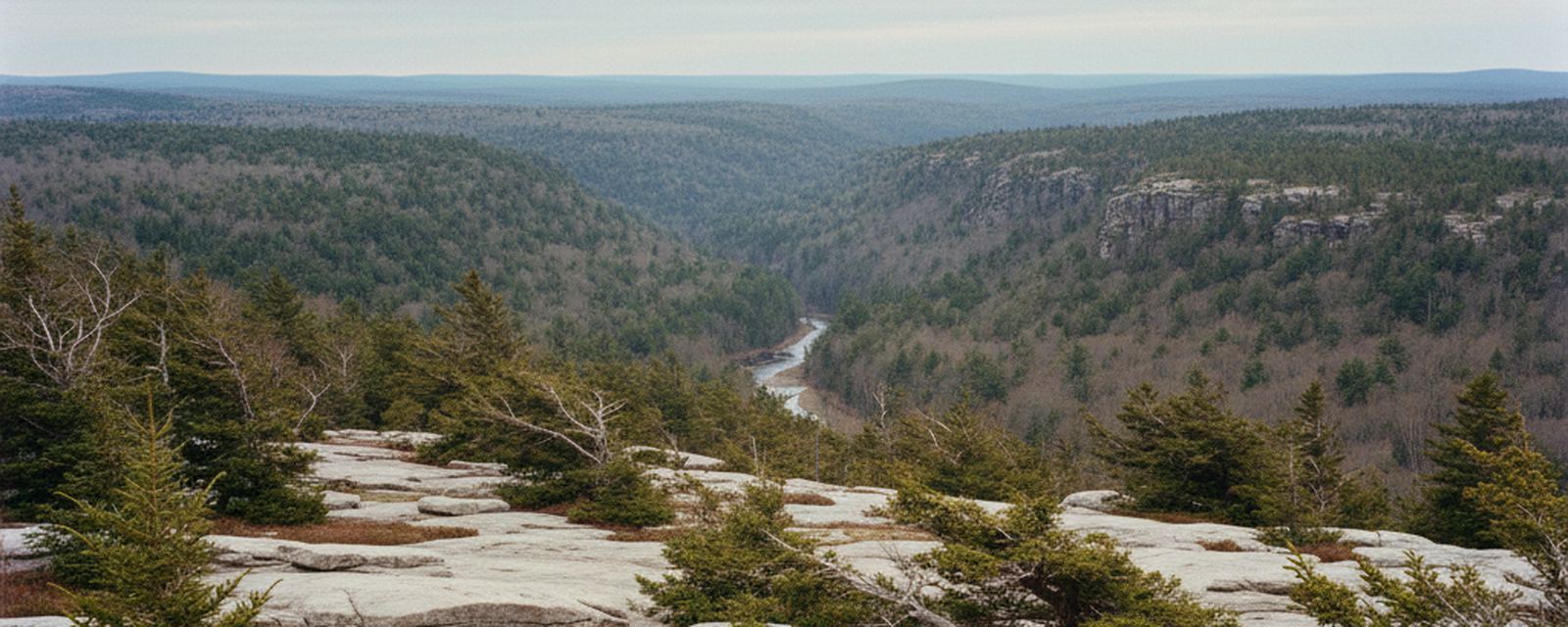
Dolly Sods is open ground on the Allegheny Front, the long break where the plateau stops and the land drops away east. The top behaves like country much farther north: heath barrens, sphagnum bog, boulder fields and stands of red spruce with branches on one side only, because the west wind never lets anything grow into it.
Red Creek runs through the middle. The water comes down the color of strong tea, stained by peat and root, and the walking tracks cross it more than once with no bridge. At the north end the ground opens into slabs of pale rock above a long fall toward the valley.
The high ground served as a firing range long ago. Posted notices still ask visitors to keep to the marked tracks and to leave any metal on the ground where it lies. Weather on the Front turns fast, and the top can be raw while the valley below stays mild.
Filling the five nights
Five nights is enough to slow down. Most parties give one early morning to the northern barrens, where low sun runs flat across the heath and the rock slabs hold the first warmth of the day. Another day goes down into the Red Creek canyon, which is steeper than the flat top suggests and always longer coming back up.
A third day tends to leave the plateau. Canaan Valley lies just west, a wide floor of bog and beaver ground with weather of its own, and below the town of Davis the Blackwater canyon holds the falls and an old grade that runs along the river. Davis and Thomas have a short main street each and are worth an afternoon on foot.
The nights left over usually go back to the same ground at different hours. Blueberry and huckleberry heath ripens late in summer and gets picked by hand in passing. After dark there is very little ground light anywhere near the barrens, and the sky shows it.
Ridge and valley, then gravel
The first part of the drive is plain. East out of the city, then the Ohio hills, then ground that folds into ridge and valley until the road is climbing and dropping with it. Farm country gives way to woodland and small river towns, and the pace drops without anything happening.
The last part is the part that counts. Pavement gives out below the plateau and the final climb is gravel, narrow, corrugated in dry spells and rutted after rain. An ordinary car manages it in good conditions, slowly and in low gear. Cell signal goes out well before the top and does not come back.
Because of that, the office sets the start of the drive so the gravel is finished in daylight. Meeting that surface in the dark at the end of 8.17 hours is the one part of this week worth planning around.
The beds sit below the climb
Nothing with a roof stands on the plateau. The nights are booked down in the valley, in one place for the whole stay, so the car gets unpacked once and stays where it is left.
That shape has a cost and the office prints it: the climb gets made again each morning and unmade each evening. Parties who want to be on the barrens for first light take the gravel in the dark at least once, by their own choice, and the outline says which mornings repay it.
Go Air Travels arranges no transport at all. What it books is the bed at the far end, from $925 per person for the five nights, and what it prints beside the bed is the number at the top of this page.
What the figure holds
- Five nights below the plateau, all of them in the same place, reserved before the drive.
- A written run of the 385 measured miles, turn by turn, with the gas stops set out.
- A note on where the pavement ends and what the gravel climb asks of an ordinary car.
- A day by day outline of the five nights, with a wet weather alternate for each.
- Any permit the land requires, arranged before the drive and billed by whoever issues it.
What it leaves to you
- Any form of transport, at either end of the drive.
- Gas, tolls and anything the car itself needs.
- Meals of any kind, at either end of the road.
- Boots, packs, water filters and everything else carried on foot.
The office adds no booking fee of its own. What you pay is what each supplier charges, and the written offer shows each line separately.
When this one is worth the road
Late June puts laurel and azalea across the heath. August and September ripen the berries and usually give settled walking weather, with the bogs low enough to cross dry. The first half of October turns the barrens red and rust and clears the long views east, though the north end draws a crowd on those weekends. Winter is the honest exception: the gravel climb is not kept clear once snow sits on it, so the office does not book this stay between the first hard snow and the thaw, rather than sell 8.17 hours that end at a closed gate.
Is there anywhere to sleep on the plateau itself?
No. The top has no roofed lodging of any sort, so the five nights are booked below it and the climb is made each day. Sleeping on the barrens means a tent and a permit, and that is a different trip from the one on this page.
Why does this page print 1.63?
It is 8.17 hours at the wheel divided by the five nights that get booked. The same division stands on every entry, so two places can be read against each other by what the road costs per night slept.
What happens when the weather shuts the top?
The outline carries a wet weather alternate for every day, most of them lower down in Canaan Valley or the Blackwater canyon. If a booked night cannot be used at all, the office writes to the place holding it and reports back what can be done.
Nothing in this list moves you. Getting from one place to the next is outside what this office reserves and it signs nothing with any carrier; you take your own car, and the office books what waits at the far end.
Start with the number of nights
Tell the office how many nights you have. Everything else follows from that number, including whether the drive is worth making at all.