Northeast Ohio by road
2 nights against 4.61 hours: reserve a 2 night Cuyahoga Valley trip from Cincinnati, 237.6 miles north
237.6 measured miles, 4.61 hours behind the wheel, 2 nights in the valley. Each night of this stay carries 2.31 hours of road, which puts the entry at the bottom of the office list, from $430 per person.
Nothing is held here until the office has written back and you have said yes to what it wrote. No part of a stay is ever paid for through these pages.
- Road from Fountain Square
- 237.6 miles
- Hours at the wheel
- 4.61
- Nights the office books
- 2
- Hours of road per night
- 2.31
- From
- $430 per person
Hours and miles are measured along the road from Fountain Square, not drawn straight on a map, and they assume clear traffic. Your own run will differ with weather, roadworks and the hour you leave.
Road first, bed second
Reserve a 2 night Cuyahoga Valley trip from Cincinnati and the road is the first thing Go Air Travels puts in writing: 237.6 measured miles north, 4.61 hours behind the wheel, two nights at the far end of them. The office works out the drive before it offers a bed, and the figure it watches is the quotient. Divide 4.61 hours by 2 nights and every night of this stay has to carry 2.31 hours of road.
That number is printed before the booking rather than found afterward. It is the fourth step of four in the office list, and the step is named plainly: the road is half the trip. Nothing about the valley is diminished by saying so. It only means the driving is a real share of these two nights and not a footnote to them.
The office runs no vehicle and arranges no transport of any kind. What it does is measure the road, then hold a room at the end of it, from $430 per person, with the final figure confirmed when the dates are held.
What stands in the valley
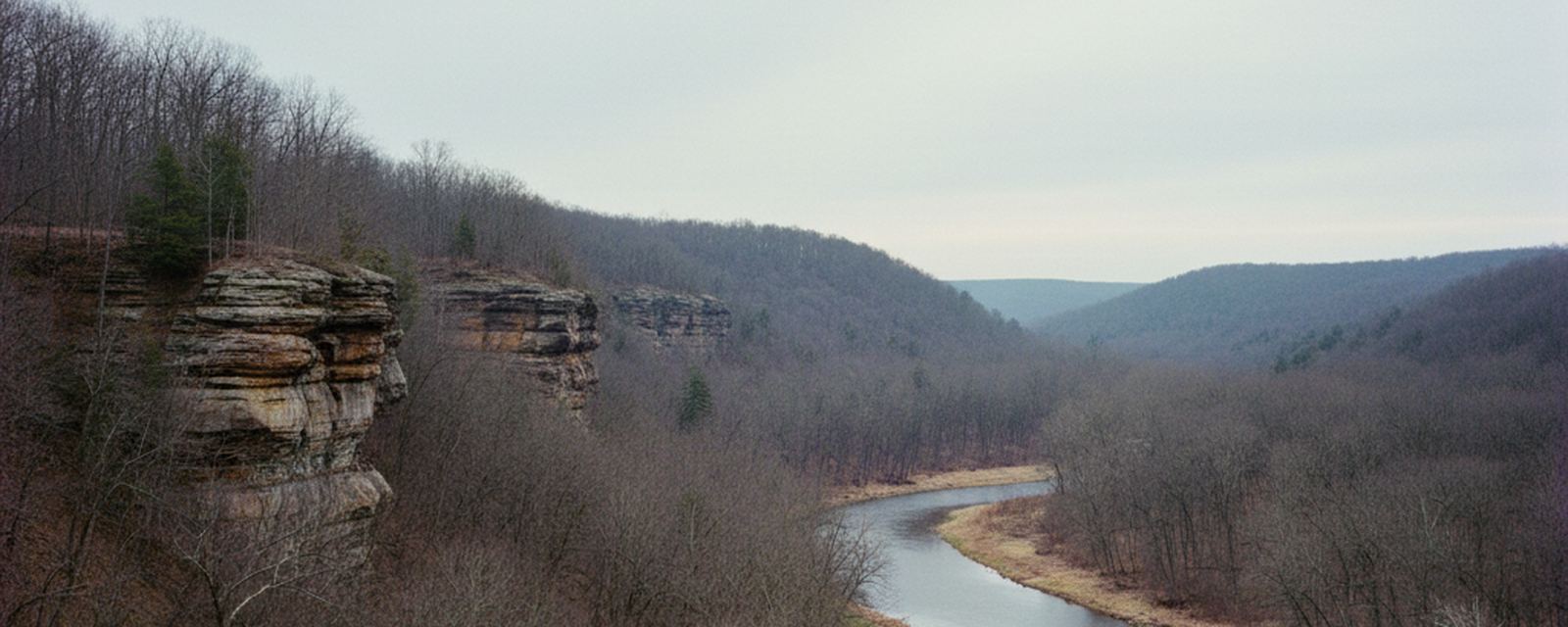
The Cuyahoga runs north through a shallow valley between Akron and Cleveland, and the ground on both banks is national park land. It is not wilderness. Farms, a few small villages and a river that spent a century as an industrial drain all sit inside the same boundary, and the protected land was drawn around them rather than in place of them.
The old canal towpath runs the length of the valley on the flat, cut for mules and now walked and ridden. Brandywine Falls drops over a shelf of sandstone at the north end and is reached on a wooden walkway. West of the river the Ledges are blocks of sandstone split into narrow passages, cool in the middle of a hot afternoon, with a west facing overlook on top that fills up in the last hour of daylight.
Beaver Marsh sits where a junkyard once did; the water took the ground back, and a low walkway now crosses it. Everett Covered Bridge stands over a creek on a back road, and the village of Boston is a handful of buildings on the river. These are small things, close together, and that is the character of the place. It rewards two slow days and punishes a schedule.
Two nights, and what fills them
The first evening is short by definition. A car that leaves Cincinnati in the morning reaches the valley with enough daylight for a stretch of towpath near the lodging and a meal, and the office does not plan anything more ambitious into it.
The first full day belongs to the valley floor: the towpath in the cool part of the morning, the marsh when the water is still, the falls later when the light is off the sandstone. None of it is far apart, and a good part of the day is spent on foot rather than in the car.
The second full day goes up onto the west rim for the Ledges and the overlook, with the covered bridge and the village on the way back down. The road home is as long as the road up, so most people either close the second day early and drive in the evening, or sleep on it and leave in the morning. The office writes down which of the two the dates allow.
North across the middle of the state
The route is the plain one. North out of the city, past Columbus on the bypass, then on across the flat middle of Ohio, where the sight lines are long and the driving is easy and dull in equal measure. The valley announces itself late; the ground only begins to fall away near the end of the 237.6 miles.
Two stops are normal on a road of 4.61 hours, and the office builds the first day around that rather than pretending the drive is nothing. Leaving early is worth more here than driving hard.
Winter changes the arithmetic. The north end of the state collects snow off the lake that the south end never sees, and the same 237.6 miles can take a good deal longer than 4.61 hours between December and March. When those dates are asked for, the office says so in writing before anything is held.
The road is half the trip
Step four of four is the plainest label in the office list, and this entry carries it. 4.61 hours of measured road against 2 nights of stay is 2.31 hours for every night, and no arrangement of the days makes that figure smaller.
Said another way, a large part of what is bought here is time on the interstate. The office prints the quotient because the person doing the driving is the one who pays it, and because a figure given afterward is worth nothing.
For some people that is the wrong trade, and a stay nearer to Cincinnati suits them better. For others the valley is worth the road precisely because two days inside it are quiet and full. The office does not argue for either answer. It prints the number and lets the number decide.
What the figure holds
- Two nights of lodging in the valley, reserved in the traveler's own name and confirmed in writing, from $430 per person.
- A road sheet for the drive up, with the measured 237.6 miles and the 4.61 hours on it, and the turns that matter once the ground starts to fall away.
- An outline for both full days, written around walking and short drives rather than a timed program.
- A wet weather version of each day, because the valley floor floods and the sandstone turns slick.
- Written answers from the office to anything asked before departure, with the reply time stated when the question is sent.
What it leaves to you
- Transport of every kind. The office operates nothing that moves and arranges nothing that moves; the car, the route and the driving stay with the traveler.
- Fuel, tolls, food, and anything bought or charged inside the valley itself.
- Insurance of any kind, and any travel document. Go Air Travels does not sell these, does not arrange them and gives no advice on them.
- Anything held beyond the two nights. A third night is a separate request with a separate figure.
- Any equipment for walking or riding the towpath.
The office adds no booking fee of its own. What you pay is what each supplier charges, and the written offer shows each line separately.
When this one is worth the road
The road argues for the warm half of the year. Water in the valley is loud in spring, when melt and rain are still coming off the high ground, and the marsh is awake by April. Late September and October put color on the slopes and cold clear evenings on the overlook, though nobody can promise which week the color lands in. Summer is green, humid and busy on weekends, which is why the office holds weekday nights when the dates allow. Winter is the honest problem: it is the one stretch of the year when the 237.6 miles deserve more thought than the two nights, and the office will say so rather than hold the dates quietly.
Does Go Air Travels arrange any part of the journey itself?
No. The office reserves the two nights and measures the road, and that is the whole of it. It operates no vehicle and arranges no transport of any kind. The car, the route and the driving stay with the traveler.
Where does the figure 2.31 come from?
It is 4.61 measured hours of driving divided by the 2 nights booked. Every entry in the office list carries that quotient and the list is ordered by it. 2.31 sits on the fourth step of four, which is the step where the road is half the trip.
Does the office handle insurance or travel documents?
No. Go Air Travels does not sell insurance, does not arrange it and gives no advice on it, and the same holds for any travel document. Anything of that kind is arranged by the traveler directly, elsewhere.
Nothing in this list moves you. Getting from one place to the next is outside what this office reserves and it signs nothing with any carrier; you take your own car, and the office books what waits at the far end.
Start with the number of nights
Tell the office how many nights you have. Everything else follows from that number, including whether the drive is worth making at all.