290.3 miles northwest
4 nights against 5.66 hours: reserve a 4 night Chicago lakefront trip from Cincinnati
Four nights on Lake Michigan at the end of 290.3 measured miles. Each of those nights carries 1.42 hours of road, and the office prints that before the room is held rather than after.
Nothing is held here until the office has written back and you have said yes to what it wrote. No part of a stay is ever paid for through these pages.
- Road from Fountain Square
- 290.3 miles
- Hours at the wheel
- 5.66
- Nights the office books
- 4
- Hours of road per night
- 1.42
- From
- $1,120 per person
Hours and miles are measured along the road from Fountain Square, not drawn straight on a map, and they assume clear traffic. Your own run will differ with weather, roadworks and the hour you leave.
One strip of public ground, four nights on it
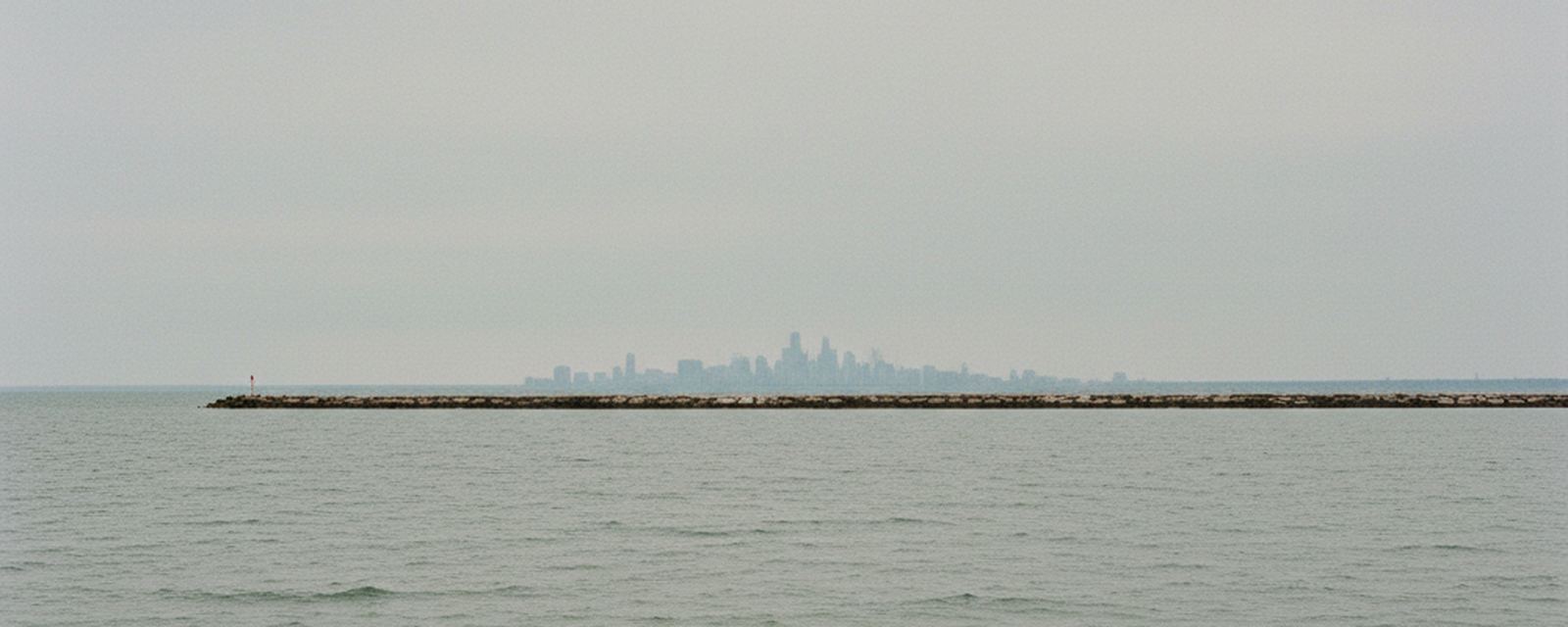
A traveler can reserve a 4 night Chicago lakefront trip from Cincinnati and spend all four of those nights inside a single strip of public ground. Chicago handed its waterfront to parkland long ago and then kept doing it, so the shore runs green and open for the whole length of the city. The wooded hook at Montrose sits at the north end of the walkable part. The lagoons and wide lawns of Jackson Park sit at the south. Between them the ground is continuous: beaches, harbors, stone revetment, playing fields, and one long path that never leaves the water for long.
Lake Michigan does the rest. It is fresh water with an open horizon, cold well into the summer and warm enough to swim in by late season most years. The lake also makes weather of its own, a wind that arrives with no warning, fog that sits on the shore while the streets a few blocks inland stay clear, and surf on the stone when the wind runs from the north.
Nothing on that shore belongs to Go Air Travels and nothing on it is sold here. The parkland is the city's, the beaches are open to anyone who walks onto them, and what the office books is a room close enough to reach the water on foot.
North and west from Fountain Square
The measured road is 290.3 miles and 5.66 hours from Fountain Square. It leaves Cincinnati on I-74, runs northwest across the state line, and holds that line to Indianapolis. At Indianapolis it turns north onto I-65 and stays on it almost to the lake.
Central Indiana is flat, farmed, and easy to drive. The Wabash valley at Lafayette is the one real change in the land. After that the road runs straight until the last stretch, which gives up farmland for dune country and the steel shore of northwest Indiana, where slips, stacks, and cranes stand between the road and the water. The city arrives over the Calumet River on a long raised roadway.
The clock moves before the state line does. The northwest corner of Indiana keeps Central time, so the hour showing at the end of the drive is an hour behind the hour the car left with. That alone makes the road feel shorter on the way up and longer on the way home.
1.42 hours of road under every night
The office sorts everything it books by one number: hours of driving divided by nights booked. Here that is 5.66 hours over 4 nights, which is 1.42 hours of road carried by each night. On the ladder the office uses, that is step three of four, and step three is stated plainly. The road is most of a day.
This is worth knowing before the room is held rather than after. A driver who leaves in the morning is on the lake in the afternoon, having given the useful part of one day to the drive and another to the drive home. Four nights is what holds the quotient where it is. Two nights over the same road would push this entry to the bottom of the list, and the office would say so on the page.
Shorter roads over longer stays sit above this entry. Longer roads over short stays sit below it. Above and below are positions in one piece of arithmetic, not a judgment about which trip is worth taking.
Filling four nights on the shore
One day can go entirely to the north shore. The path leaves the beach houses and runs past harbor after harbor, water on one side and park on the other. The hook at Montrose is planted as a stopping ground for migrating birds, and in spring and fall it fills with people who come for nothing else.
Another day belongs to the middle of the city, where the parkland narrows and thickens: a formal park with a fountain at its heart, gardens built on made ground, a cluster of museums on a peninsula south of the river mouth, and the locks where the river meets the lake. The path runs straight through all of it without a break.
The south end asks for a day of its own and is the quietest of the three. The lagoons and wooded island of Jackson Park were laid out for an exposition and never taken apart. A round stone promontory in Hyde Park stands out in the water with the skyline visible back up the shore. The fourth day usually goes inland, to the neighborhoods that back onto the parkland or to the boulevard system that links the parks together.
Where the work stops
Go Air Travels books rooms and measures roads. That is the whole of it. Transport of every kind sits outside the work: no seats, no sailings, no rail, no coach, no transfers of any sort. The car that covers the 290.3 miles belongs to the traveler, and so does every decision about it.
The office is independent. It speaks for no company, represents none, and names none on this page, not even the one that will hold the room. That name goes into the written offer that follows a request, where it belongs, rather than onto a page anyone can read.
The figure beside this entry is from $1120 per person, and it is confirmed when the room is held. What it covers, and what it leaves out, is printed with it. Insurance, visas, and passports fall outside the work entirely: the office sells none of them, arranges none of them and offers no opinion on any of them.
What the figure holds
- Four nights at one address within walking reach of the lakefront parkland, held in the traveler's own name.
- Written confirmation of the reservation, sent before the drive begins.
- Local lodging taxes quoted inside the figure rather than added at the end.
- A road sheet for the drive: 290.3 miles, 5.66 hours, and the turns that make them up.
- A plan for the shore written day by day, built for four nights rather than a weekend.
- One named contact at the office for any change to the dates or the room.
What it leaves to you
- The drive itself: fuel, tolls on the way in, and anything the car needs.
- Parking for the car once it arrives, which the lodging charges by the night.
- Meals, admissions, and anything bought along the shore.
- Transport of every kind, in both directions.
- Insurance of any sort. The office does not sell it, does not arrange it, and does not advise on it.
The office adds no booking fee of its own. What you pay is what each supplier charges, and the written offer shows each line separately.
When this one is worth the road
The shore is at its most usable from June into early October, when the water is warm enough to enter and the path is dry end to end. May and late October trade that for quiet: clear light, empty beaches, and a lake too cold for anything but looking at. Winter is a different proposition, with wind coming off the water and nothing in its way, ice on the stone, and long stretches of parkland with no one on them. The office will book these four nights in any month, but the price is built around walking ground, and the walking is easiest in the warm half of the year. Nothing about the weather over Lake Michigan is promised here, because nothing about it can be.
Does the office move anyone to Chicago?
No. Go Air Travels arranges no transport at all, in any form and in either direction. It measures the road and books the nights at the far end of it. The driving is the traveler's own, in the traveler's own car.
What does 1.42 hours per night actually mean?
It is 5.66 hours of measured driving divided by the 4 nights booked. Every entry the office keeps prints that same division, and the order of the list follows it. At 1.42 the road is most of a day, which is step three of the four steps the office uses.
Can the shore be reached without driving inside the city every day?
Yes. The room is booked within walking reach of the parkland, and the shore is continuous on foot from the north beaches to the south lagoons. The car can stand still for all four nights if the traveler wants it to.
Nothing in this list moves you. Getting from one place to the next is outside what this office reserves and it signs nothing with any carrier; you take your own car, and the office books what waits at the far end.
Start with the number of nights
Tell the office how many nights you have. Everything else follows from that number, including whether the drive is worth making at all.