Five nights, one forest
Reserve a 5 night Allegheny National Forest trip from Cincinnati, 1.58 hours of road a night
The road runs 388.8 measured miles and 7.89 hours from Fountain Square. Go Air Travels reserves the five nights at the far end of it, which puts 1.58 hours of driving on every night held.
Nothing is held here until the office has written back and you have said yes to what it wrote. No part of a stay is ever paid for through these pages.
- Road from Fountain Square
- 388.8 miles
- Hours at the wheel
- 7.89
- Nights the office books
- 5
- Hours of road per night
- 1.58
- From
- $950 per person
Hours and miles are measured along the road from Fountain Square, not drawn straight on a map, and they assume clear traffic. Your own run will differ with weather, roadworks and the hour you leave.
Five nights against a day at the wheel
The number that orders this whole list is hours divided by nights. Here it comes to 1.58. That is what a single night of the stay has to carry, and it places this trip on the third step of four, where the road is most of a day. To reserve a 5 night Allegheny National Forest trip from Cincinnati is to take on 388.8 measured miles and 7.89 hours at the wheel, then to set five nights against them.
Said plainly: 7.89 hours of driving spread over five nights leaves 1.58 hours of road on each one. Fewer nights would leave more on each, and the office prints that here rather than mentioning it after a request comes in. Five is the shortest stay it puts against this particular drive.
Prices start from $950 per person for the five nights. The figure covers the nights and the written work around them, not the car and not the road. What is finally owed is confirmed in writing when the reservation is made, against named dates and a named property.
What the forest actually holds
The Allegheny National Forest is the only national forest in Pennsylvania, something over half a million acres across four counties in the northwest corner of the state. It is second growth, cut over hard in the logging era and grown back into black cherry, maple, beech and hemlock. Underneath it is a plateau split by creeks, so the climbs are short and the valleys are deep and narrow.
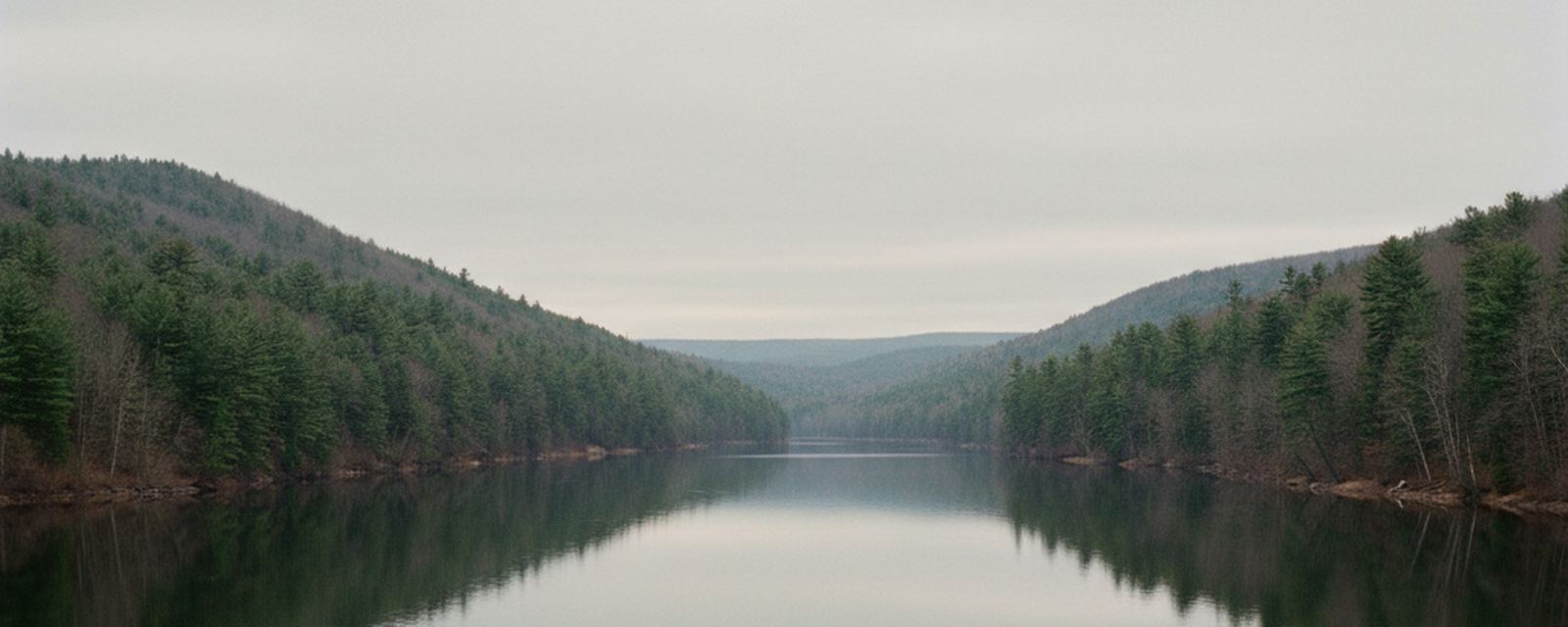
Water sets the shape of a stay. The Allegheny Reservoir lies long and thin behind Kinzua Dam and reaches north over the New York line, with a loop road down one side and rock outcrops above it at Rimrock and at Jakes Rocks. Below the dam the river runs slow and braided around wooded islands, which is why so much of what people do here happens on the water.
Two other things stand out. Hearts Content and Tionesta hold stands of white pine and hemlock that were never cut, and walking into them is the closest thing in the state to seeing this country as it was. East of the reservoir, at Kinzua Bridge State Park, a tornado brought down most of an iron viaduct; what is left runs out over the valley and ends in a glass floor. This is also a working forest, with timber sales, gas wells and gravel haul roads in daily use, and a visitor sees all of that too.
Where the five nights are spent
Lodging sits in the small towns around the forest and along the reservoir rather than inside it. The office reserves one property for all five nights and does not move anyone halfway through, because shifting beds inside a forest this size costs more driving than it saves. Parking is at the property, for one car.
Five nights fill without strain. One day goes to the reservoir loop and the overlooks above it. One goes to old growth and a creek trail, with boots that can take mud. One goes east to the viaduct and the plateau behind it. One goes on the water, paddling or fishing, or on a bicycle where the gravel allows. The fifth is left empty on purpose, because weather here rearranges plans and a spare day absorbs that.
Inside the forest the roads are mostly gravel and the signal is thin to none. The night by night plan says which of the five days asks for real driving and which does not, and it prints the turn onto the last paved road so nobody hunts for it after dark.
North across Ohio, then up the valley
The drive leaves Fountain Square heading north and stays on interstate for most of its length. Columbus comes first, then the road swings east through the flat middle of Ohio, past Akron and the old river towns, and crosses into Pennsylvania east of Youngstown. None of that stretch is difficult. It is simply long, and it is where the hours accumulate.
The last part changes character. The road turns north, four lanes drop to two, the hills close in and the Allegheny valley narrows around the river. Gas and food thin out well before the forest line, which is worth knowing at dusk.
The route is written out from Fountain Square with a sensible place to break the day, for anyone who would rather not take 7.89 hours in one sitting. A night on the road is a separate reservation and sits outside the five.
How narrow this office is
Go Air Travels measures roads and reserves beds. It moves nobody. No transport of any kind is arranged from this office, and no agreement is held with any business whose work is moving people. The car in the driveway belongs to the traveler and stays the traveler's responsibility for the whole trip.
Insurance, visas and passports fall outside the work. The office sells none of them, arranges none of them and offers no opinion on any of them, and it will say so again if asked.
The office is independent of every property it reserves. Nothing on this page names one, because that name belongs in the written reply to a request, next to the dates, the address and the total, where all of it can be checked before anything is agreed.
What the figure holds
- Five nights of lodging near the forest, held in the traveler's name and named in writing before anything is agreed
- The measured road from Fountain Square written out, with a sensible place to break the 7.89 hours
- A night by night plan for the five days, each one with the driving inside the forest it asks for
- Parking at the property for one car
- One named contact at the office for the whole stay, in writing
- The total in writing, against named dates, before the reservation is confirmed
What it leaves to you
- Transport of every kind. The office arranges none of it
- Fuel, tolls, road food and anything the car turns out to need
- Meals, unless the written confirmation lists one
- Gate fees, permits, rentals and anything bought on site
- cover for a trip, which this office neither sells nor holds any opinion about
The office adds no booking fee of its own. What you pay is what each supplier charges, and the written offer shows each line separately.
When this one is worth the road
October is what most people drive for. Black cherry and maple turn early on the plateau, and the loop above the reservoir holds color for a couple of weeks. Summer is quieter than the foliage weeks and better for water, with long light and warm shallows behind the dam. Winter is real winter here, with lake effect snow, unplowed forest roads and skiing tracks, and it suits anyone content to stay close to one stove. Spring is the honest weak spot: mud season softens the gravel and the creeks run high. Measured against 7.89 hours of road, this trip repays the drive best from late June through the end of October, and again in deep snow when the plan is to sit still.
Does Go Air Travels arrange any part of the journey itself?
No. The office measures the road, prints the hours and reserves the nights at the end of it. Transport of every kind stays with the traveler, and the office holds no agreement with any business that moves people.
Can the 7.89 hours be split over two days?
Yes, and many people do. The office writes where the halves fall and what is open at that hour. A night taken on the road is reserved apart from the five and sits outside the from $950 per person figure.
Does the office sell or advise on travel insurance?
No. Insurance, visas and passports are outside this work. The office does not sell them, does not arrange them and offers no advice about any of them.
Nothing in this list moves you. Getting from one place to the next is outside what this office reserves and it signs nothing with any carrier; you take your own car, and the office books what waits at the far end.
Start with the number of nights
Tell the office how many nights you have. Everything else follows from that number, including whether the drive is worth making at all.